Close
That's Who We R

That's Who We R

An Identity That Matches the Scale

Visit website

An Identity That Matches the Scale

The objective

Las Vegas REALTORS® represents more than 15,000 members across Southern Nevada. The brand was a logo and three colors in a PDF. No system, no guidelines, no visual language. It had to hold at that scale, across every surface the association touches. It needed one idea to organize around: a REALTOR® is a neighbor first, working for homeownership, fair housing, and the community they live in. The brand's job was to make that idea legible and carry it everywhere the association shows up.
Client

Las Vegas REALTORS®

Scope

Brand Identity

Design System

Communications

Contributions

Creative Direction

Art Direction

Photography

Graphic Design

Videography

Timeline

2021 — 2025

( → )Built as infrastructure, not decoration

The approach

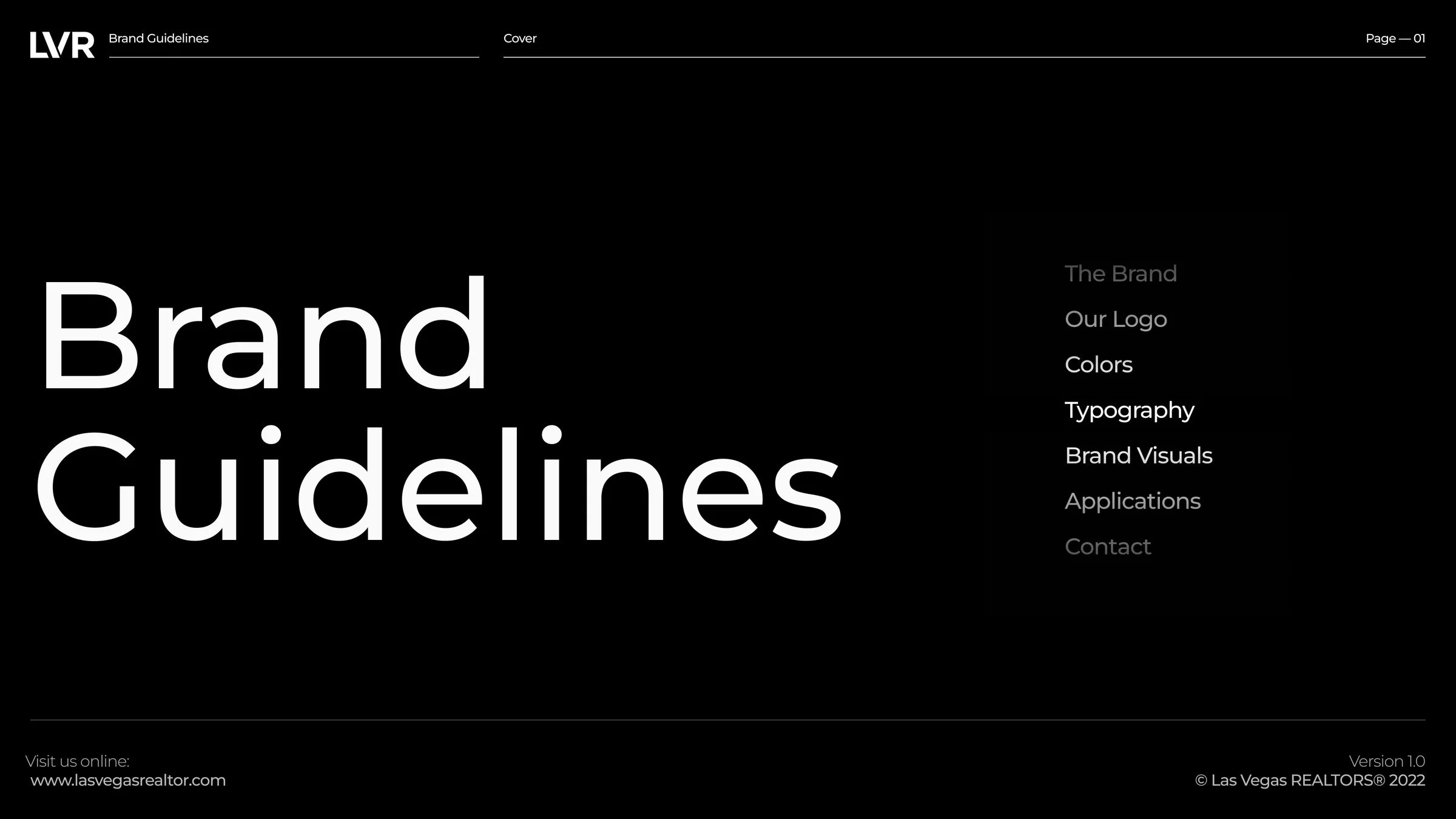
A brand this size has to survive contact with reality. The people putting it in front of members work in education, membership, events, and accounting. Most of them are not designers, and the requests move fast. That ruled out the stylized directions of the moment. Fintech minimalism, 3D, heavy script — each would have impressed the design-literate few and lost everyone else. So the brand was built as infrastructure: a small, consistent set of patterns anyone could apply and still land on brand. Recognizable everywhere it has to work at once, in any hand that picks it up.
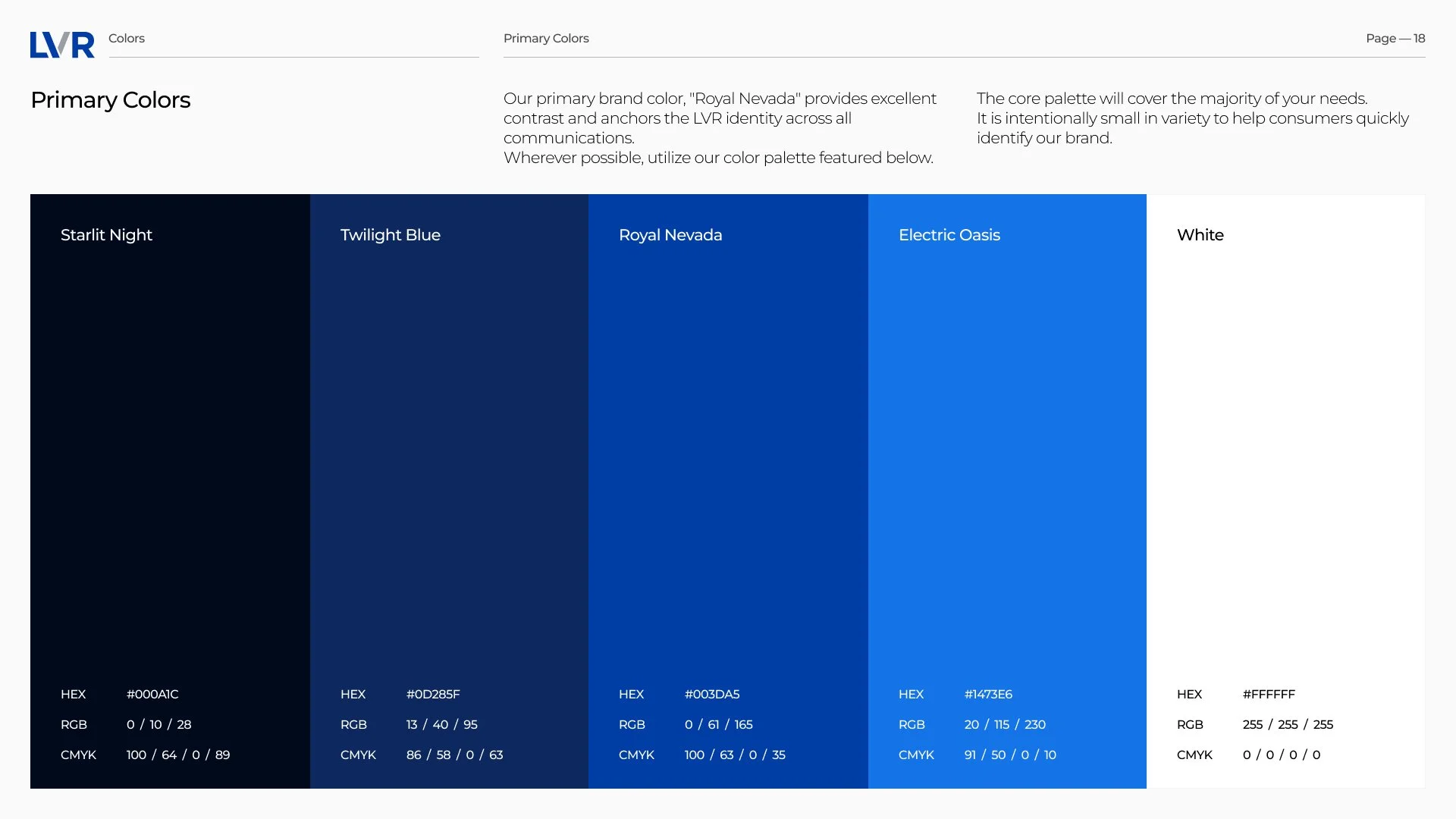
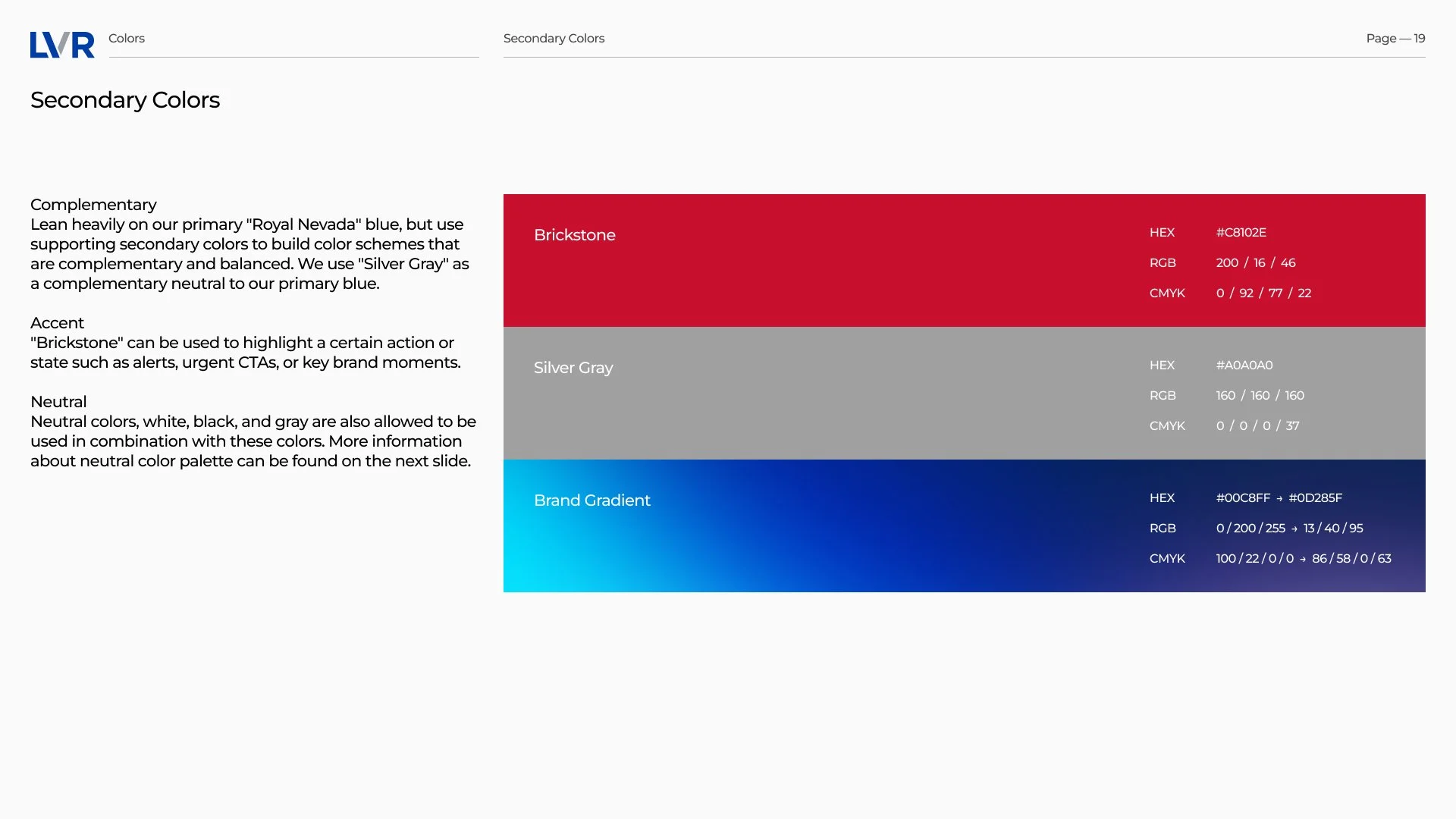
LVR brand color palette
Restrained by design

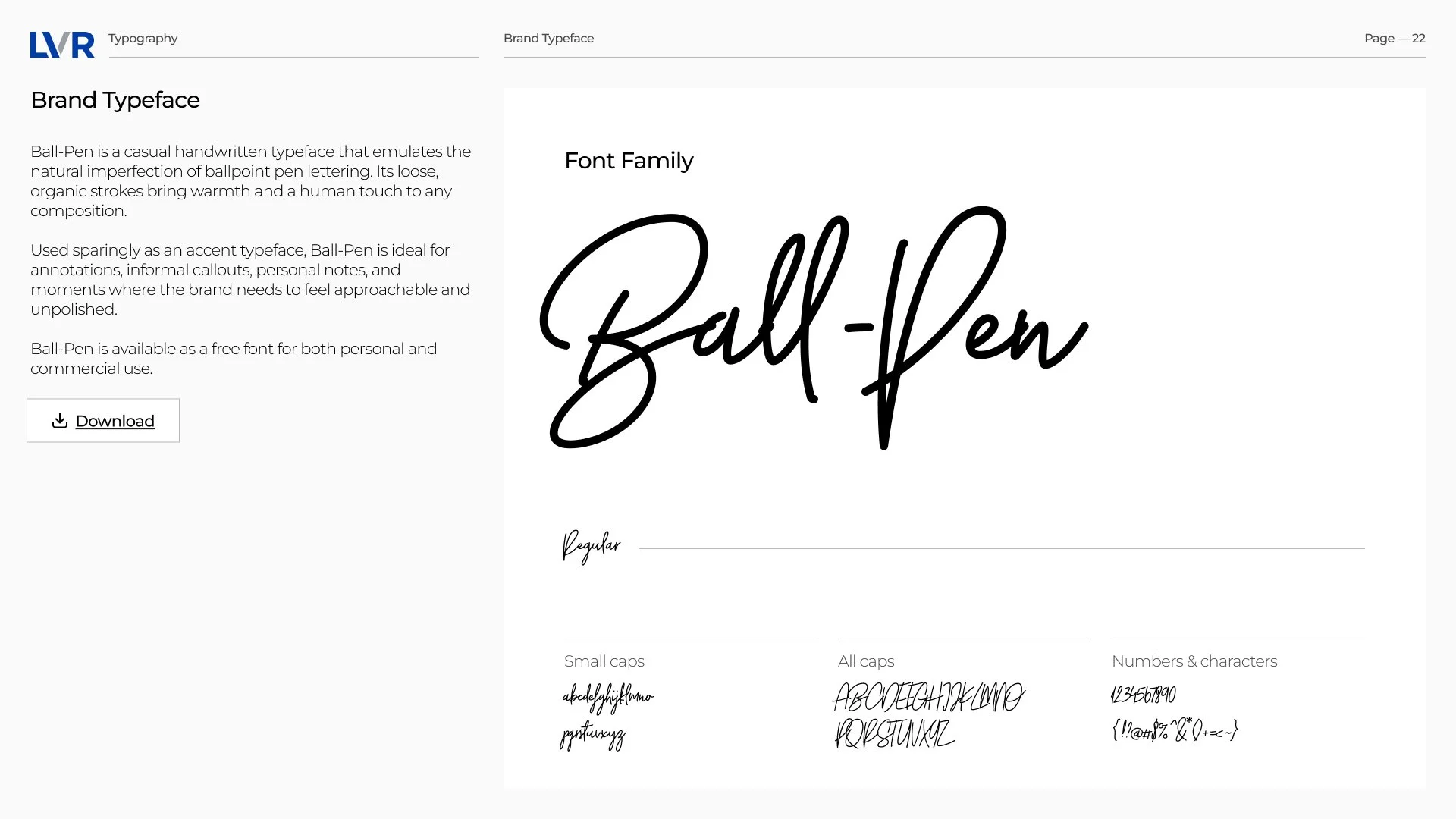
The color system is monotone, a tight range of blues and white. Fewer variables leave fewer ways to drift, and the warmth comes through the photography instead. The type is just as lean, with one deliberate exception: a script face that adds a handwritten note, because REALTORS® work in handshakes and signatures. Restraint is the part most people skip, and it is what keeps the system from fighting itself.

LVR Ballpen typography specimen

( → )The brand lives where the members do

Photography direction

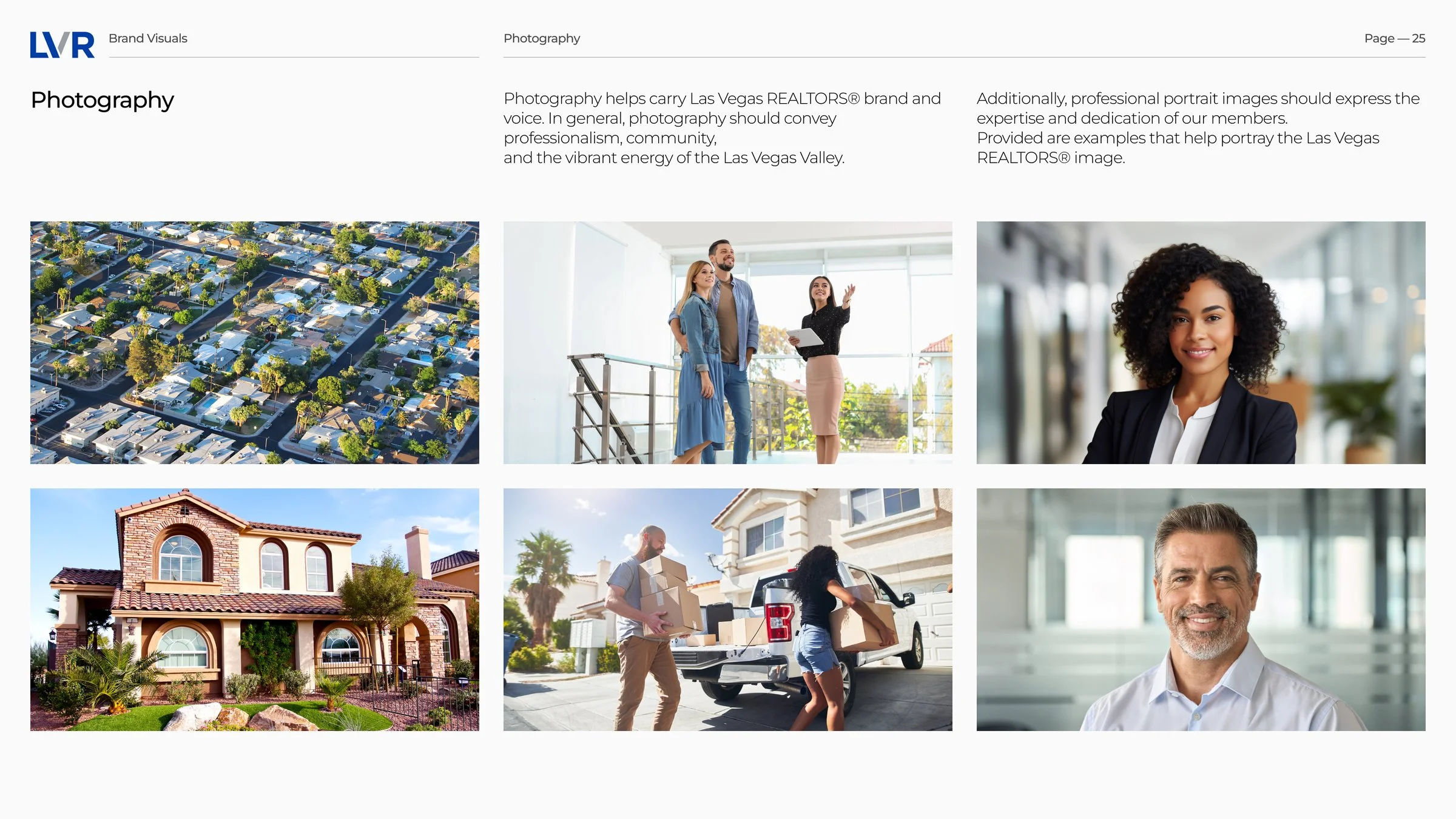
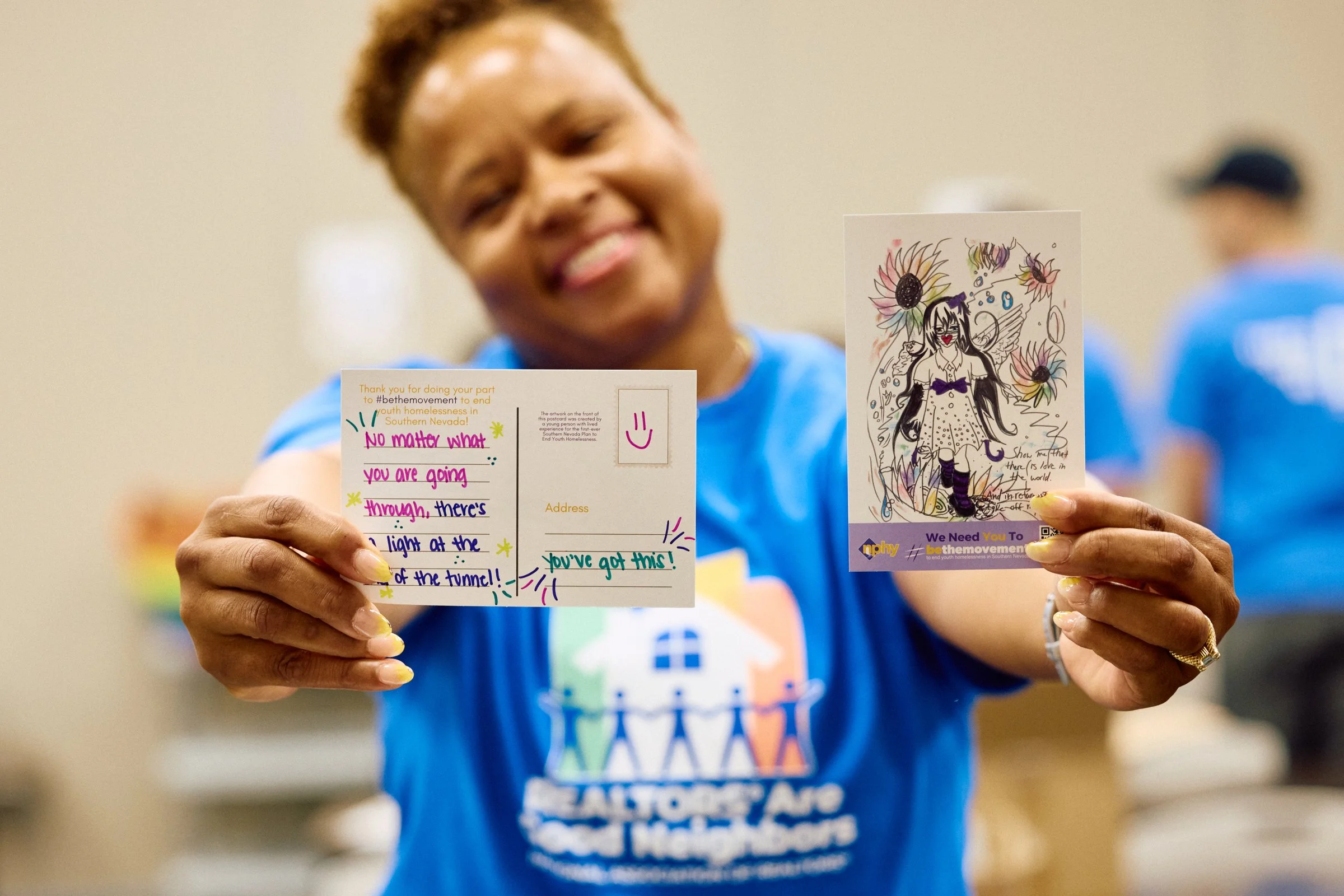
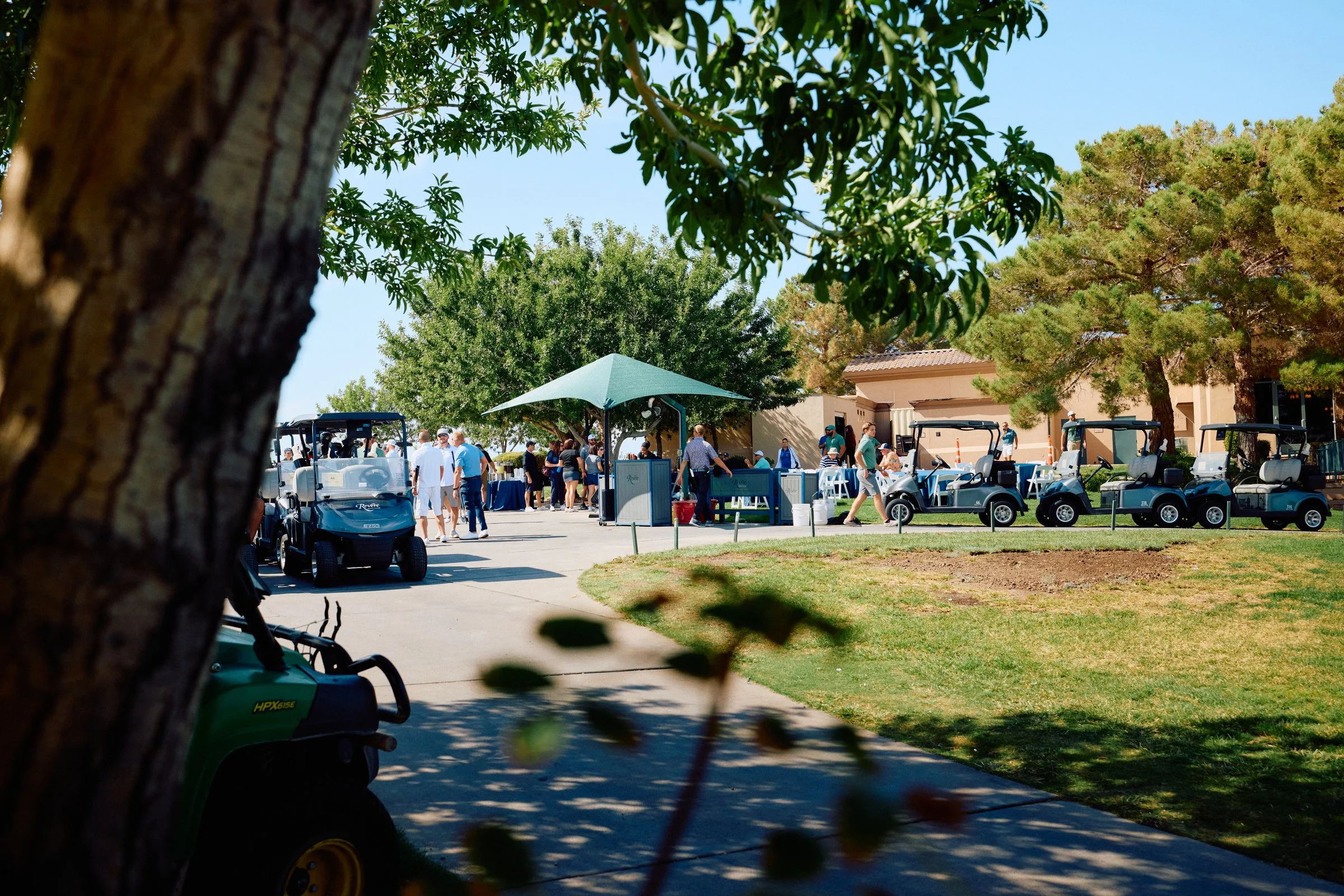
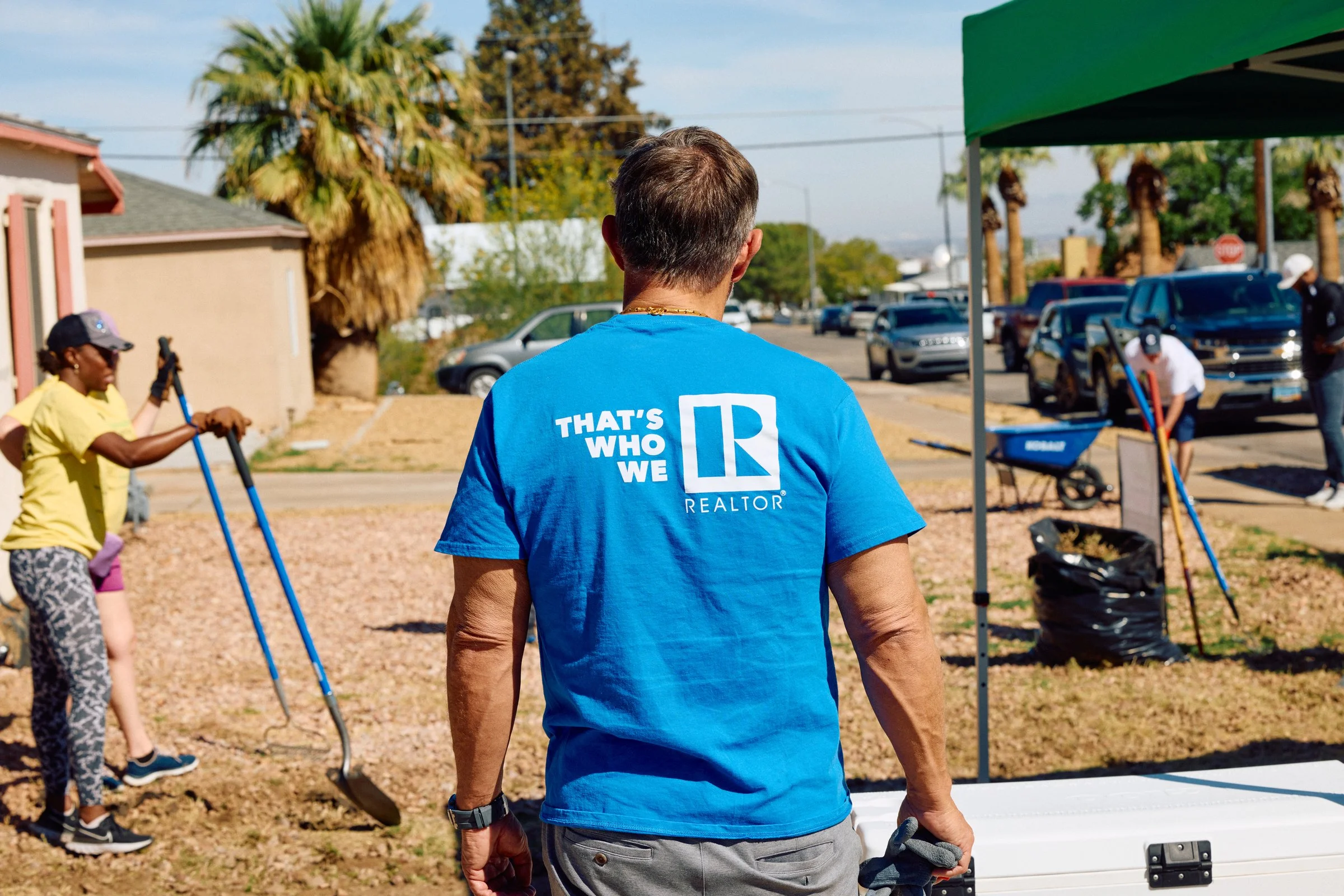
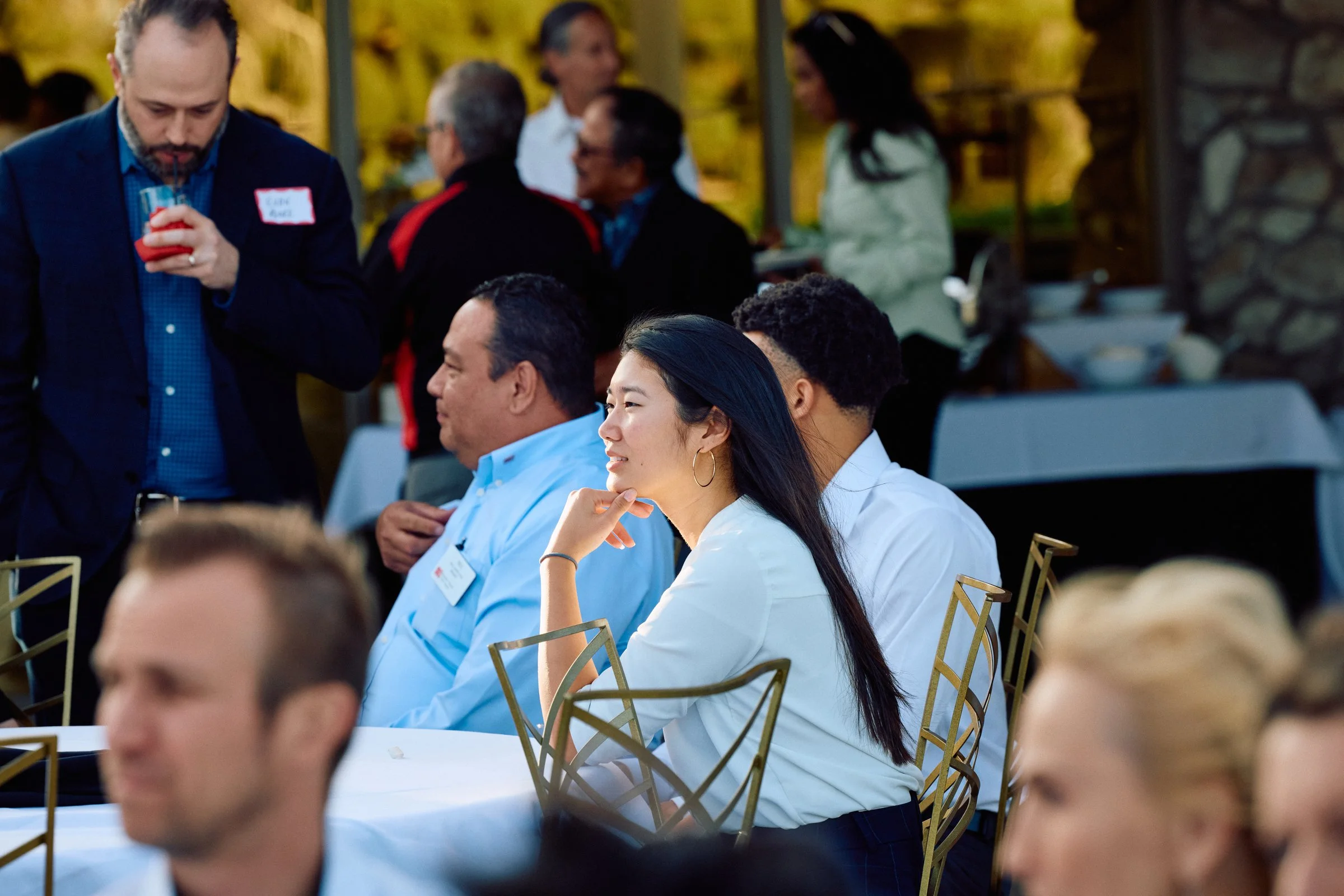
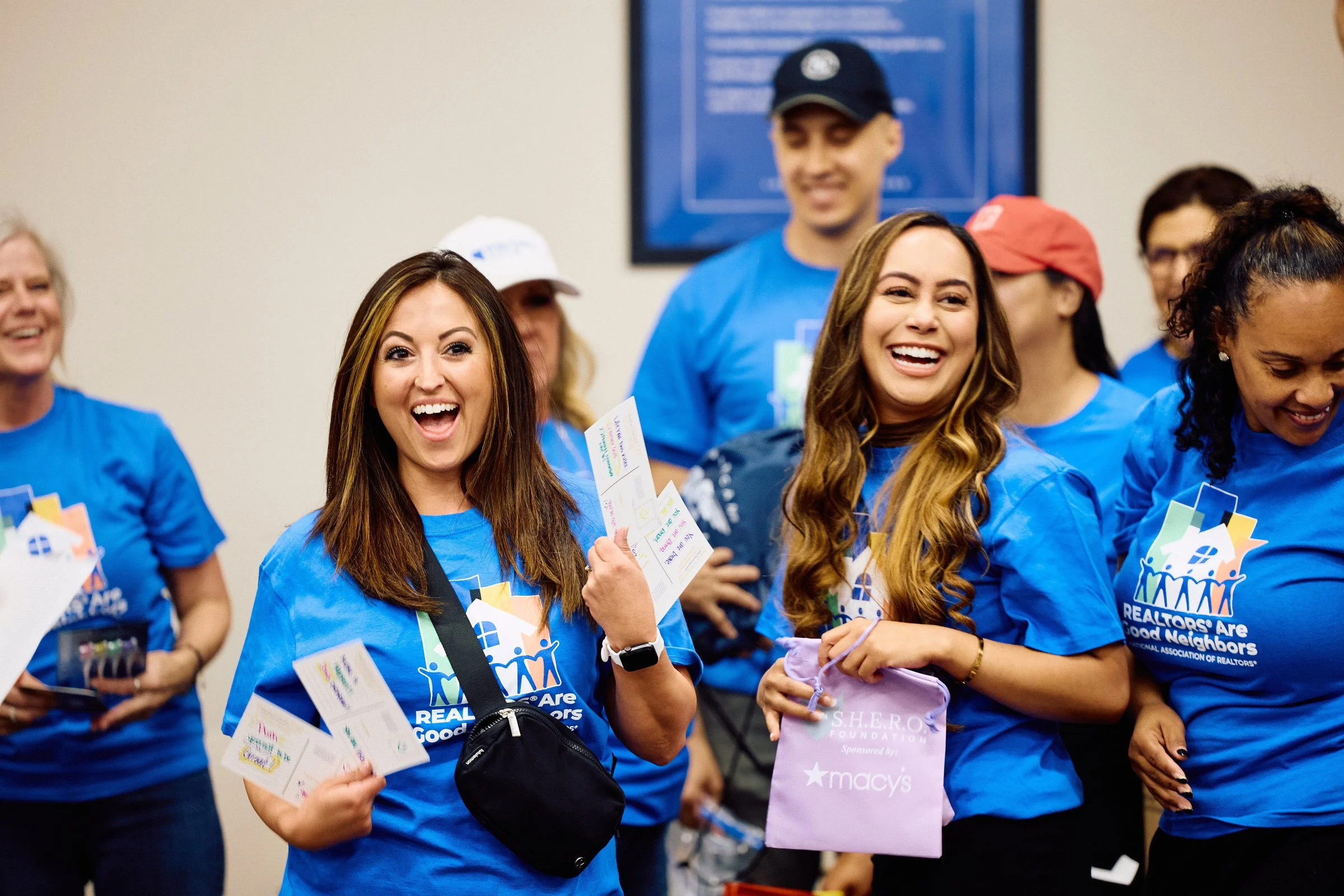
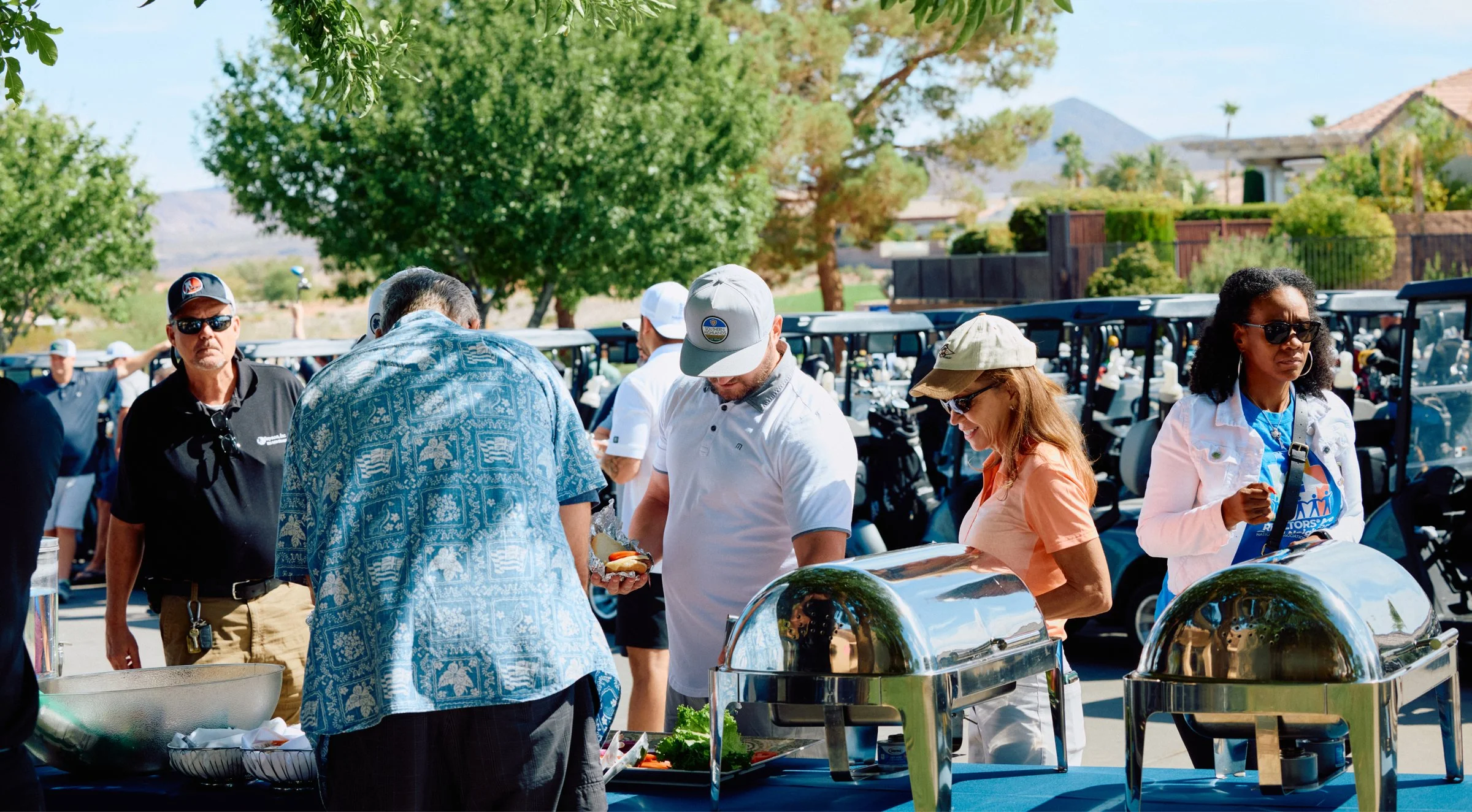
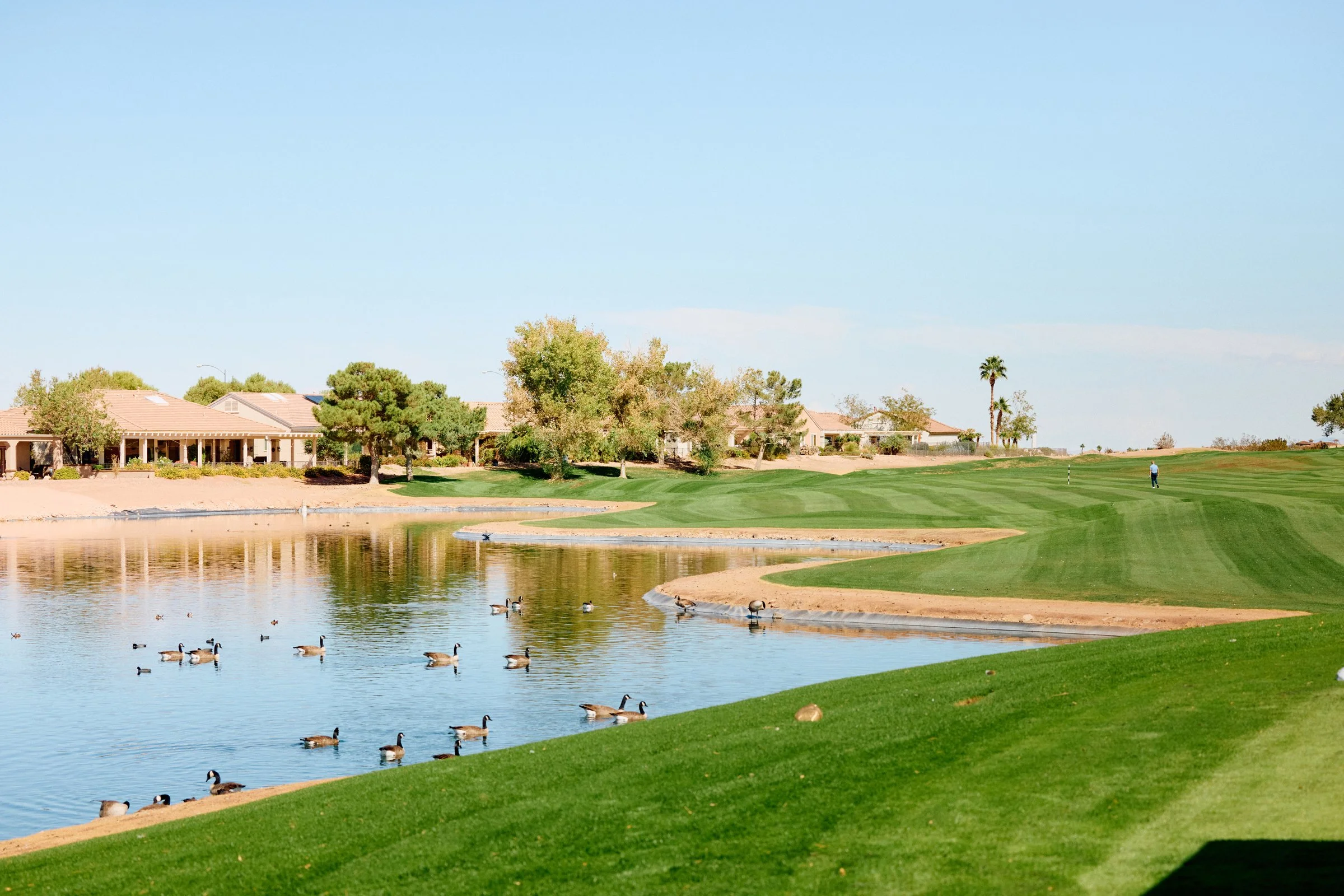
The photography is warm, present, and human. Real members instead of stock, photographed in the places they actually live and work. The strip, the casinos, and the nightlife stay out of frame. They are the first thing anyone pictures when they think of Las Vegas, which is exactly why they were never the point. The brand belongs to the people who live here, so the camera points at them: general membership meetings, charity builds, the neighborhoods and families the work is really about.

( → )A place to make the work

The production layer

A brand standard only holds if there is a place to make the work. An in-house studio gave it one, built for filming, editing, and live production. More than a production room, it gave members somewhere to step into the brand and make content alongside the association instead of having a staff voice stand in for them. That is the point where the brand started to shift from something the association published to something its members took part in.

Every inbox, one voice

Email is the most direct line the association has to its members, so it had to carry the brand cleanly and reach all of them. The old setup was all or nothing — opting out of one thing meant opting out of everything, which had pushed a third of the list to leave. It runs now on a preference-based architecture, where members choose exactly what they receive, with the full membership enrolled. Four years on, fewer than 100 members have unsubscribed entirely, and open rates hold between 60 and 65 percent.

( → )One brand on every surface

The system in use

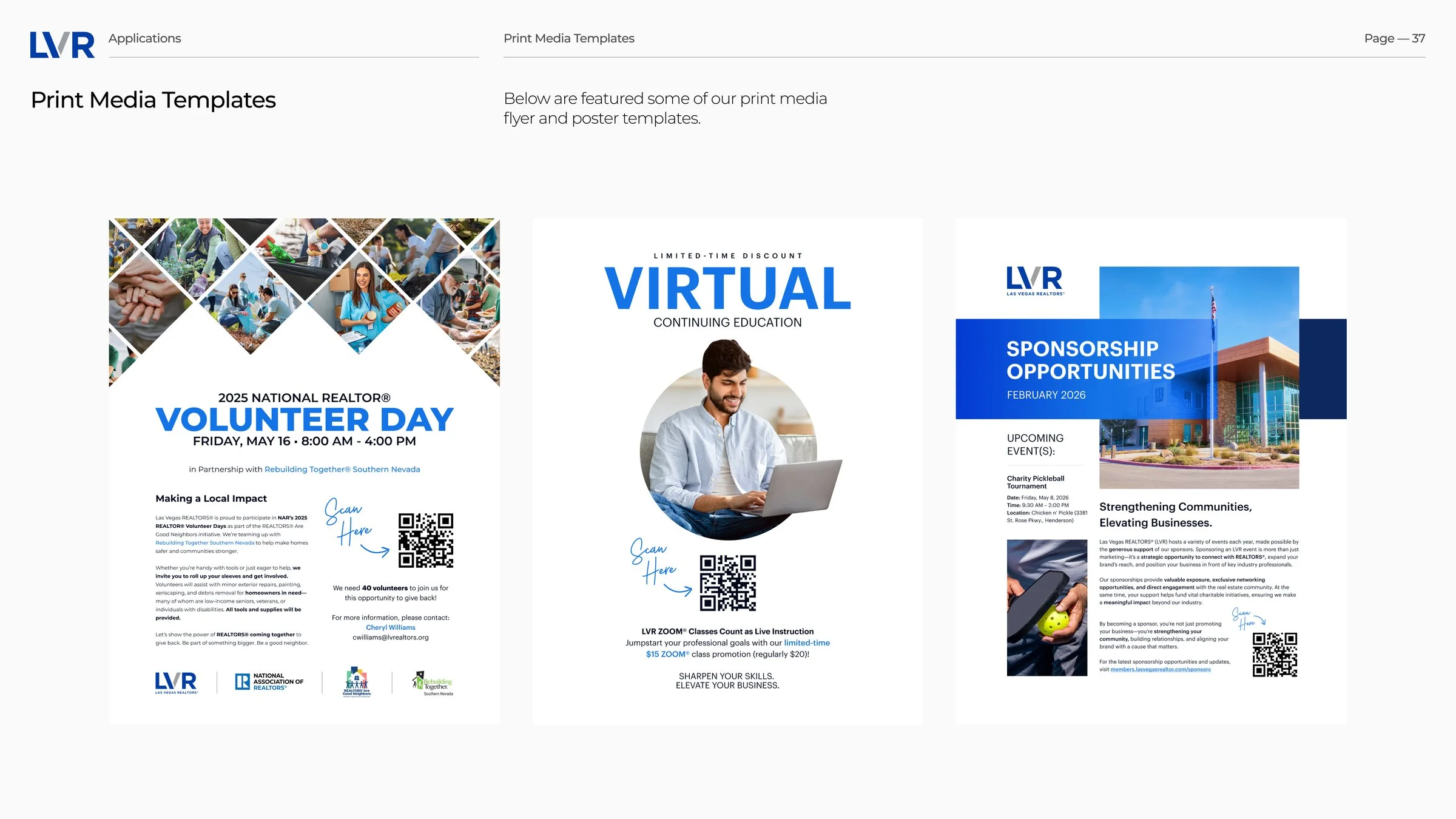
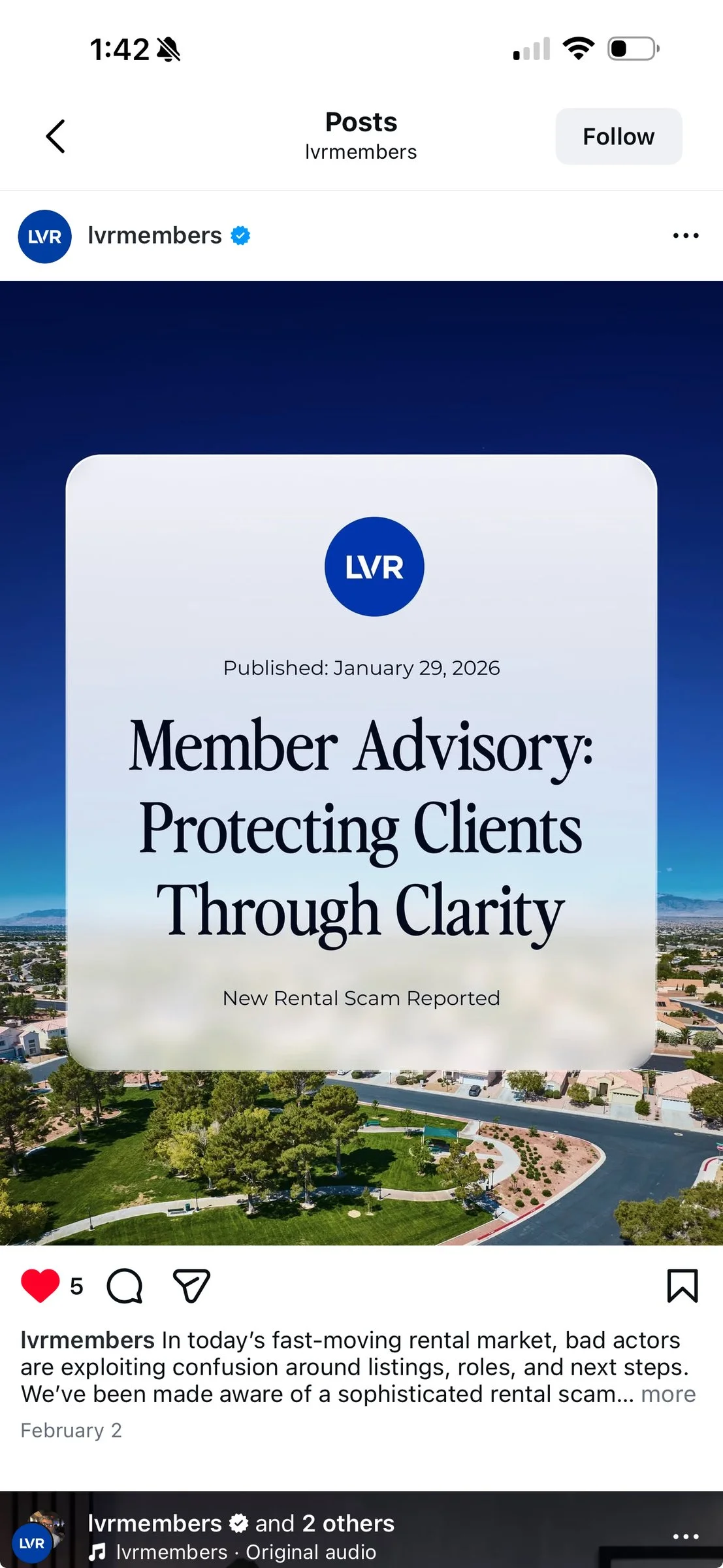
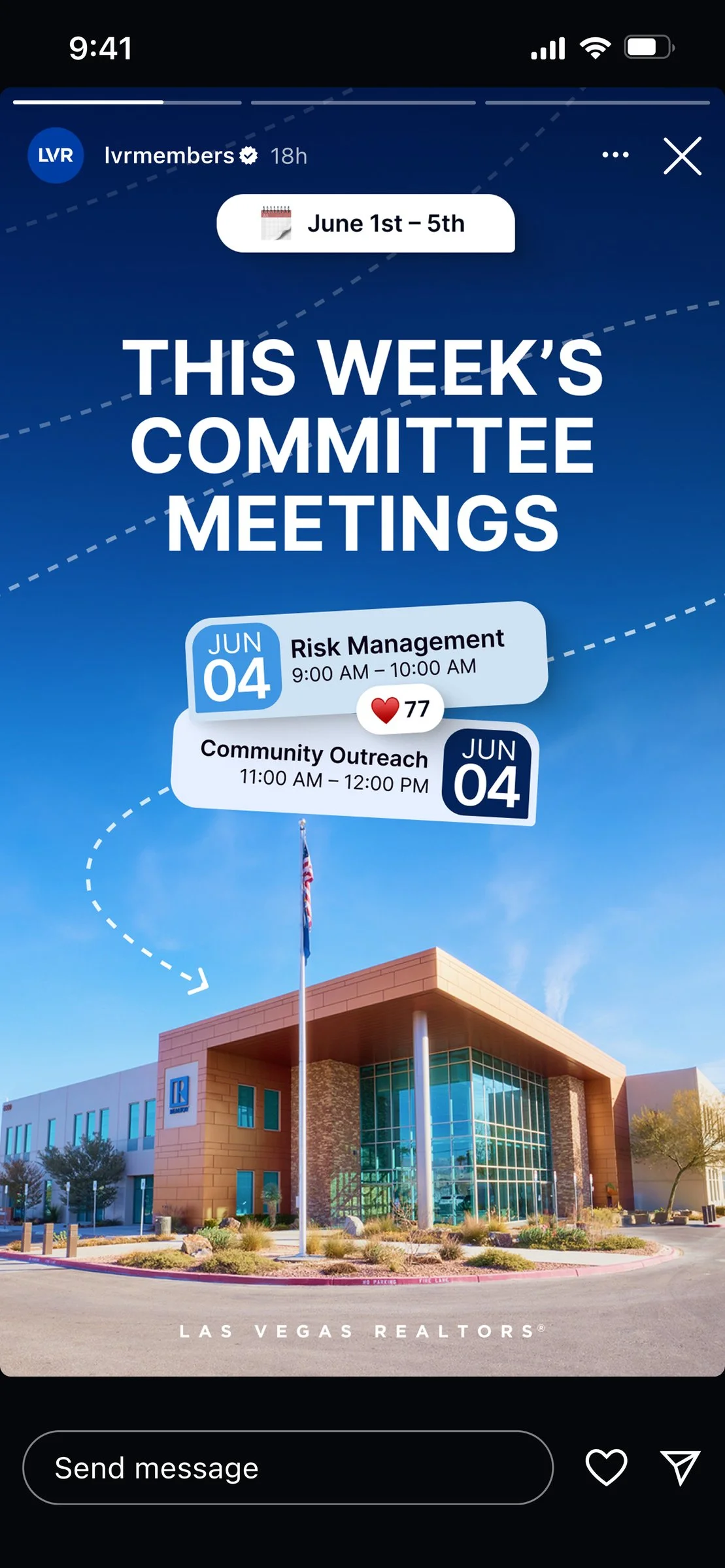
The real test of a system is how far it stretches without breaking. Print, screen, stage, and paper come out of the same small set of parts, so a member meets the same brand at a conference, in their feed, or in their hands. The breadth is the proof. A brand only counts if it holds up everywhere it shows up.
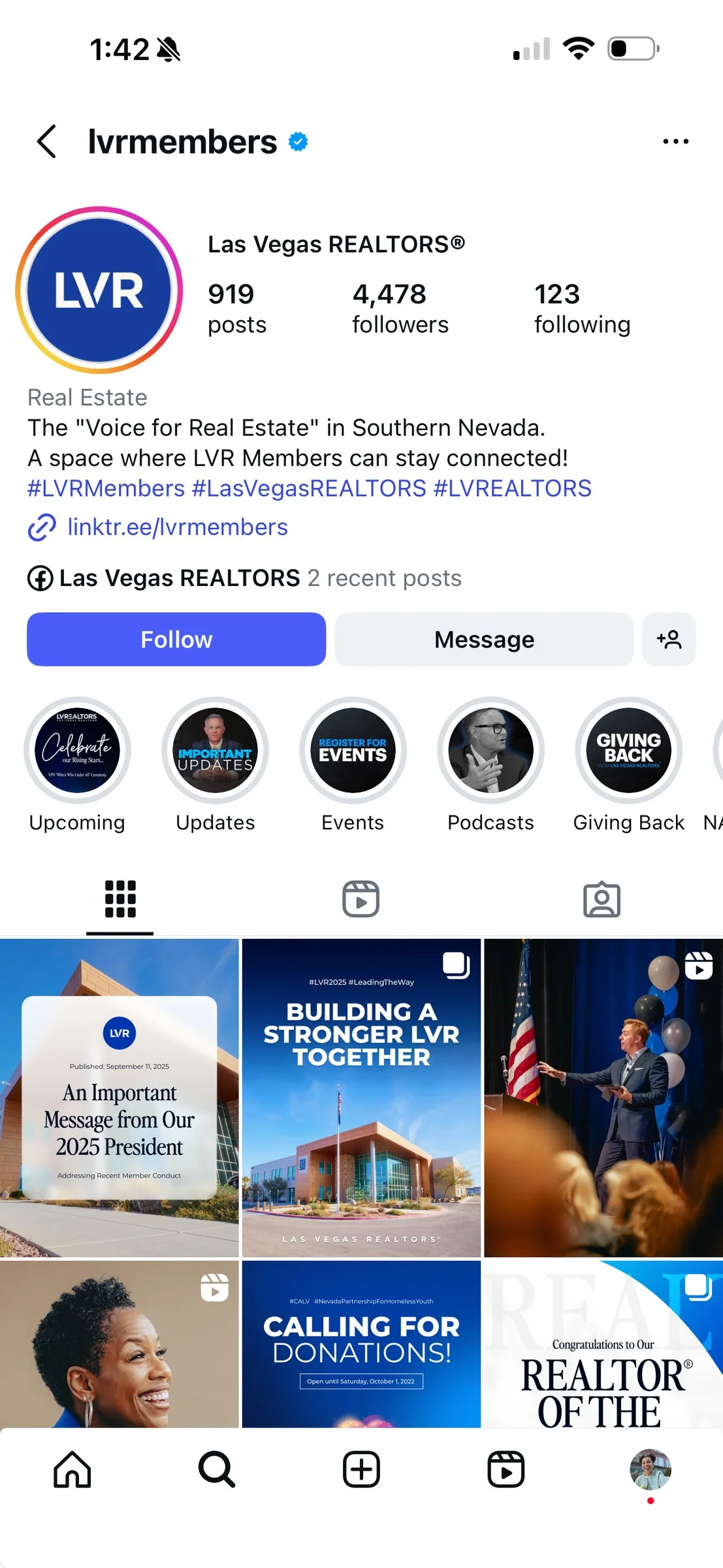
LVR Instagram profile
LVR Instagram story
LVR Instagram post

( → )The simplest system survives the most opinions

The discipline

An organization this size will always have opinions about its brand. The system absorbs that pressure by putting members at the center instead of preferences. Real members at real events become the visual identity, and everyone sees themselves in it because it is them. Holding a brand this simple is harder than letting it grow complicated, and that is the work.

My role

The brand answered to a single principle: the members are the subject, and the system stays simple enough that anyone could use it without breaking it. Holding that line was most of the work. I set the direction and built the foundation directly — the identity, the guidelines, the photography, the communications. I made the case to the board for the in-house studio, secured the $160K to build it, and planned the space myself. The team that carried the brand forward came later. What stands here is the groundwork, set before there was a system to maintain.

Metrics

15,000+

Members represented

$160K

In-house studio, 2024

60–65%

Email open rate

<100

Members fully unsubscribed, 4 years

What endured

What lasted is the idea underneath the work: the members are the brand. The studio gave that somewhere to live, and members began showing up in the work and on their own channels, making content with the association instead of watching it speak for them. Of everything built here, putting members first is the part that stuck.

Additional Credits

Austin Williamson

Creative Direction

Kurtis Murray

Photo / Video Production

Devin Sheffield

Videography

Sirena Ojeda

Social Media

Aleks Blagojevic

Graphic Design

Luis Suaréz

Development

We Make It Easy

We Make It Easy

Consumer Campaign

We Make It Easy